
Mufti Muhammad Taqi Usmani

Mufti Muhammad Taqi Usmani is a renowned figure in the field of Shariah, particularly in Islamic Finance. He currently holds advisory positions in a number of financial institutions practicing Islamic Banking and Finance.
Mufti Muhammad Taqi Usmani has vast experience in Islamic Shariah, teaching various subjects on Islam for 39 years. He has served as a Judge in the Shariat Appellate Bench, Supreme Court of Pakistan from 1982 to 2002. He is also the Editor of the magazine ‘Albalagh’ (a weekly publication of Jamia Darul Uloom, Karachi) as well as an active contributor of articles in leading Pakistani newspapers.
Born in India, Mufti Muhammad Taqi Usmani graduated from Punjab University, Pakistan in 1970 and also holds an LLB from Karachi University, Pakistan. Prior to these, he completed the ‘Takhassus’ course, which is the specialization course of Islamic ‘Fiqh’ and ‘Fatwa’ (Islamic Jurisprudence) from Jamia Darul Uloom Karachi, Pakistan.
In March 2004, His Highness Sheikh Mohammad Bin Rashid Al Maktoum (Dubai Crown Prince and UAE Minister of Defense) presented a special award to Mufti Muhammad Taqi Usmani in recognition of his lifetime service and achievement in Islamic Finance at the occasion of International Islamic Finance Forum, Dubai, which is one of the biggest events in Islamic Finance Industry.
Mufti Muhammad Taqi Usmani advises a number of international financial institutions including Dow Jones, Bharain Monetary Agency and Islamic Corporation for the Development of the Private Sector (A Member of the IDB Group) on Islamic law.
Sheikh Abdul Sattar Abu Ghuddah
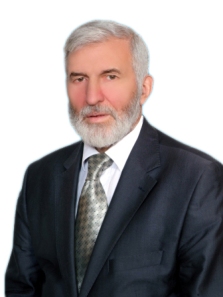
Dr. Abdul Sattar Abu Ghuddah is the Shariah Advisor and Director, Department of Financial Instruments at Al-Baraka Investment Co. of Saudi Arabia. He holds a PhD in Islamic Law from Al Azhar University Cairo, Egypt. He is an active member of Islamic Fiqh Academy and the Accounting & Auditing Standards Board of Islamic Financial Institutions.
Dr. Abdul Sattar teaches Fiqh, Islamic studies and Arabic in Riyadh and has done a valuable task of research and compiling information for the Fiqh Encyclopedia in the Ministry of ‘Awqaf’ and Islamic Affairs, Kuwait. He has been a member of the ‘Fatwa’ Board in the same Ministry from 1982 to 1990.
Dr. Daud Baker
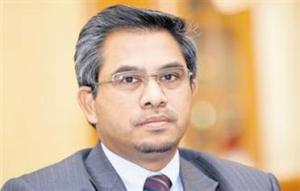
Dr. Muhammad Daud Bakar was an Associate Professor in Islamic Law and Deputy Rector at the International Islamic University Malaysia (IIUM). He received his first degree in Shariah from the University of Kuwait in 1988 and Ph.D from the University of St. Andrews, U.K. in 1993. He completed his external Bachelor of Jurisprudence at University of Malaya 2002.
He is presently a member of the Shariah Advisory Council at the Central Bank of Malaysia, Securities Commission of Malaysia, Oasis Asset Management (Cape Town, South Africa), Accounting and Auditing Organization for Islamic Financial Institutions (AAOIFI), Dow Jones Islamic Index (New York). Dr Bakar now operates his own Islamic training and education facility.
Sheikh Yusuf Talal DeLorenzo

Sheikh Yusuf serves as a Shariah advisor to over 20 global financial entities, including index providers, banks, mutual funds, real estate funds, leasing funds, institutional investors, home finance providers, alternative asset managers and others.
Sheikh Yusuf is the author of “A Compendium of Legal Opinions on the Operations of Islamic Banks”, the first English reference on the fatawa issued by Shariah boards. His three-volume publication has become the standard reference for Islamic financial institutions. In addition, Sheikh Yusuf wrote the introduction to “Islamic Bonds”, the 2003 book that introduced Sukuk and transformed the world’s Islamic capital markets. His written work has appeared in journals and newsletters and as chapters in books, including Euromoney’s “Islamic Asset Management”, “Islamic Retail Finance and Islamic Finance: Innovation & Growth”. His entries on the terminology of Islamic Finance appear in The Oxford Dictionary of Islam.
Sheikh Yusuf is also a special consultant, appointed by the Asian Development Bank and the Islamic Development Bank in Jeddah to the International Financial Services Board (“IFSB”) on the subject of Sukuk. IFSB is the international standard-setting body of regulatory and supervisory agencies that have a vested interest in ensuring the soundness and stability of the Islamic financial services industry, broadly defined to include banking, capital markets and insurance.
Sheikh Nizam Yaquby

Sheikh Nizam Yaquby is a graduate in Economics and Comparative Religion from McGill University and is an internationally acclaimed scholar in the Islamic banking industry. He advises a number of banks and financial institutions including Abu Dhabi Islamic Bank, BNP Paribas, Dow Jones, Lloyds TSB, Citi Islamic Investment Bank E.C. Bahrain and Standard Chartered on matters pertaining to Islamic Banking and Finance.
Sheikh Nizam Yaquby has contributed important original research on many aspects of modern Islamic finance, and is considered one of the world’s leading experts in the field. Since 1976, he has taught tafsir, hadith and fiqh in Bahrain. He is also the author of several articles and publications on Islamic finance and other sciences in English and Arabic.
Dr. Mohamed A. Elgari

Dr. Mohamed A. Elgari holds a Ph.D. in economics from the University of California. He is a professor of Islamic Economics at King Abdul Aziz University. He is an expert at the Islamic Jurisprudence Academies of the Organization of Islamic Countries and the Islamic World League. Dr. Elgari is member of Shariah Boards of many Islamic Banks and Takaful Companies including that of Dow Jones, International Islamic Fund Market, Citi Islamic Investment bank, Merrill Lynch and Saudi American Bank.
Mufti Hassan Kaleem

Mufti Hassan Kaleem studied Islamic jurisprudence at Jamia Darul Uloom Karachi and specialized in the science of issuing Islamic legal edicts. He serves on the Shariah board of a number of international institutions including Deloitte and Bank al-Baraka. He is renowned as an expert on Takaful (Islamic insurance). He is a student of the renowned Sheikh Taqi Usmani.
Dr. Muhammad Imran Ashraf Usmani

Dr. Muhammad Imran Ashraf Usmani is a M. Phil and Ph. D. in Islamic Finance and is a graduated as a scholar from Jamia Darul Uloom, Karachi, Pakistan. He has also completed the specialization course in Islamic Jurisprudence from Jamia Darul Uloom, Karachi, Pakistan. Currently he is involved in conducting training sessions for Meezan Bank’s staff in the area of Islamic finance and has been teaching several subjects of Islamic Fiqh since 1998 at Jamia Darul-Uloom, Karachi, Pakistan. Dr. Usmani has also authored various books on Islamic Shariah and especially his book ‘Meezan Bank’s Guide to Islamic banking’ has been the guiding light in the area of Islamic Banking.
Dr. Usmani serves as a Sharia Supervisory Board Member / Sharia Advisor to State Bank of Pakistan, HSBC Amanah Finance, Credit Suisse, Lloyds TSB, Meezan Bank, Pak Kuwait Takaful Co and others.
Mufti Najeeb Khan

Mufti Najeeb Khan is Shariah Advisor at Habib Metropolitan Bank and a leading authority on Shariah compliancy. He holds the notable distinction of having personally overseen the execution of over one thousand murabaha transactions and is keenly familiar with the issues involved in the area of Shariah compliancy related to execution. He delivers talks at a variety of institutes and conferences including the National Institute for Banking and Finance, Jamia Darul Uloom, and the Centre for Islamic Economics. He holds the Alamiyyah and Takhassus from Jamia Darul Uloom.
Mufti Muhammad Zubair Usmani

Mufti Muhammad Zubair Usmani completed his Doctorate in Islamic Finance form Karachi University. He is also the Fazil Takhassus (specialist of Islamic Fiqh and Fatawa) from Jamia Darul Uloom Karachi and is also a research scholar and teacher.
Besides being the Shari’ah Advisor, Muslim Commercial Bank; he is also the member Transformation Commission Sub-committee, State Bank of Pakistan; Islamization of Economic Committee Chamber of Commerce, Karachi; Implementation of Supreme Court Judgment on Riba Committee, Institute of Chartered Accountant of Pakistan and governing body Al-Markaz-ul-Islami, Dhaka, Bangladesh.
Sheikh Essam Ishaq

Sheikh Essam M. Ishaq graduated in Political Science from McGill University, Montreal, Canada. Currently he is teaching Fiqh, Aqeeda and Tafseer courses in Bahrain. He holds the position of Shariah Advisor at Discover Islam, Bahrain and is on the Board of AAOIFI as well as First Islamic Investment Bank.

Sheikh Al-Siddiq Mohamed al-Darir of Sudan is one of the leading Islamic Finance scholars of today. He serves as the head of the Shariah Board at Faisal Islamic Bank of Sudan and Methaq Islamic Insurance Company. He is also a member of the Shariah Council of AAOIFI. He lives in Khartoum, Sudan, where he Dean of the Faculty of Law at Khartoum University.

Sheikh Al-Manea of Saudi Arabia is a member of the Shariah Council of AAOIFI. He also serves on the Shariah Boards of Alahli Takaful Company, HSBC, SABB Takaful and others. He is a former judge of the Court of Cassation of Saudi Arabia.
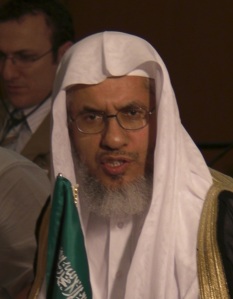
Sheikh Al-Atram of Saudi Arabia is chairman of the Shariah Board of Al-Rajhi Investment Corporation and is a member of the Shariah Council of AAOIFI. He has written numerous legal verdicts in his capacity as Shariah Advisor.

Dr. AbdulAziz Al-Qassar is a Kuwaiti national holding a Bachelor’s degree in Shari’a from the University of Kuwait, a Masters degree and a PhD degree from the Al-Azhar University in Islamic Jurisprudence (Fiqh). He is currently an assistant professor of the Shari’a College at Kuwait University.
Dr. AbdulAziz is a member in the Shari’a Board of many Islamic financial institutions and banks around the world.
 Islamic Finance Resource